
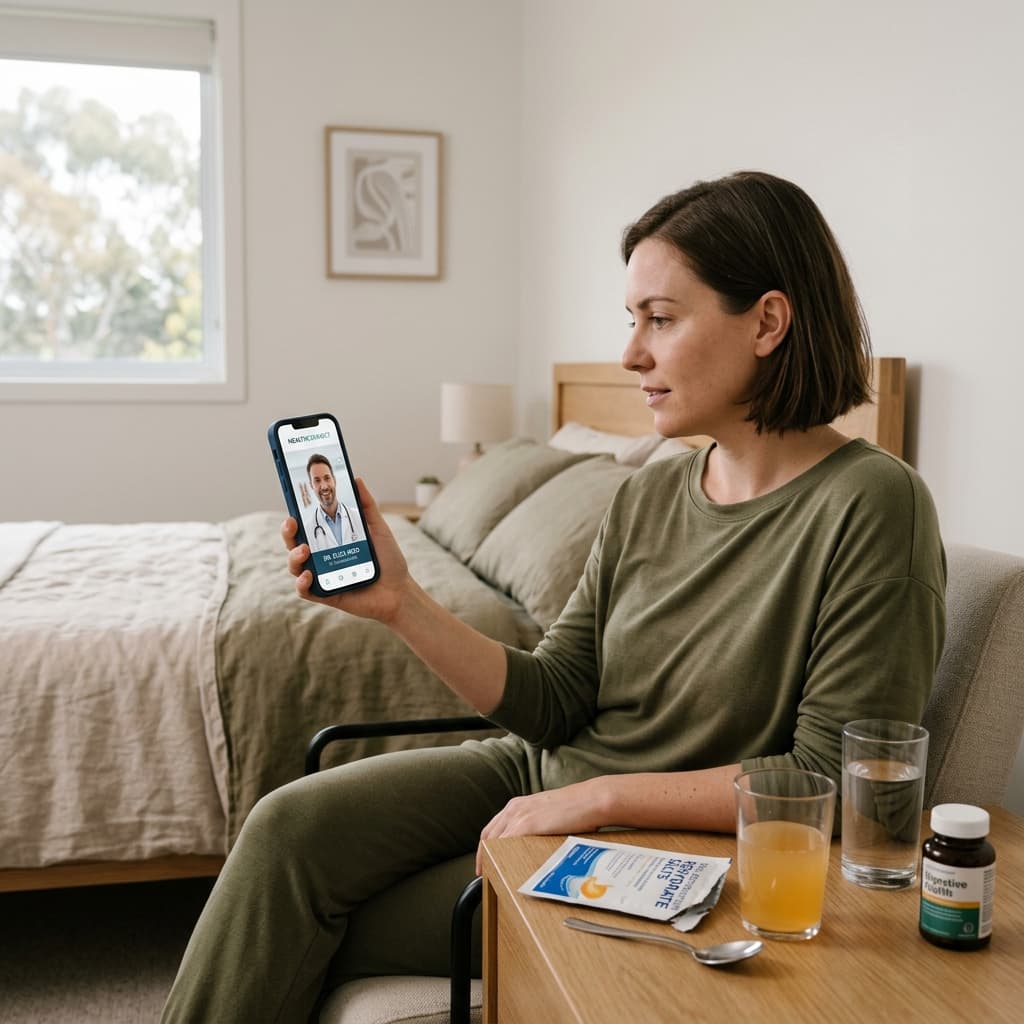
When vomiting, diarrhoea, nausea, and stomach cramps hit suddenly, the last thing most people want is a long wait in a clinic. For mild to moderate gastroenteritis, telehealth can be a fast way to get medical advice, work or study documentation, and guidance on when symptoms are serious enough for urgent review.
This guide is designed for uncomplicated gastro. If you have severe abdominal pain, blood in the stool, or signs of severe dehydration, telehealth should not be your only step.
What Is Gastro?
Gastro, or gastroenteritis, is inflammation of the stomach and bowel that commonly causes nausea, vomiting, diarrhoea, abdominal cramping, and fatigue. It is often caused by a viral infection, though bacteria, food poisoning, medications, or other conditions can produce a similar picture.
Common Symptoms of Gastroenteritis
- Loose or frequent bowel motions
- Nausea or vomiting
- Abdominal cramping
- Bloating or stomach discomfort
- Low energy or weakness
- Low-grade fever in some cases
When Telehealth Is a Good Fit
Telehealth works best for mild to moderate gastro symptoms when you need advice, reassurance, symptom management, or a clear escalation plan. It can also be helpful if you need a certificate because symptoms make it unrealistic to work, study, or travel.
- You can still keep some fluids down
- Your symptoms started recently and you want treatment advice
- You want to understand dehydration warning signs
- You need to know whether home care is still reasonable
- You need a certificate or follow-up plan
What a Doctor May Help With
Assessment
A telehealth doctor can assess how often you are vomiting or opening your bowels, whether dehydration is becoming a concern, what your pain is like, and whether the pattern still sounds like uncomplicated gastro.
Symptom Relief
Depending on your history and symptoms, the doctor may discuss medication for nausea or other supportive treatment options when appropriate.
Work and Study Documentation
Gastro is one of the common situations where people also need a medical certificate because they are not fit for work, university, or school.
How To Manage Mild Gastro at Home
- Take small, frequent sips of water or oral rehydration fluid
- Rest and avoid strenuous activity
- Return to simple foods gradually once vomiting settles
- Avoid alcohol and very heavy or greasy meals
- Wash hands carefully and clean shared surfaces to reduce spread
Signs of Dehydration and When To Escalate
Dehydration is the main reason uncomplicated gastro becomes unsafe. Seek urgent medical care if you have:
- Inability to keep fluids down
- Very little urine or dark urine
- Dizziness, faintness, or confusion
- Persistent vomiting
- Blood in vomit or stool
- Severe or localised abdominal pain
- High fever or rapid worsening
If you are unsure whether you still fit an uncomplicated gastro picture, our emergency vs GP guide can help you think through escalation, but severe dehydration always needs prompt attention.
Why People Choose Telehealth for Gastro
- You can stay home instead of travelling while unwell
- You reduce the chance of spreading infection in waiting rooms
- You can get fast advice about hydration and red flags
- You can discuss whether you are fit for work or study
Gastro vs Viral Illness or Emergency Care
This article is for vomiting, diarrhoea, nausea, stomach cramps, hydration advice, and deciding whether telehealth is appropriate. It is more specific than a general viral infection guide.
If symptoms are mostly cough, fever, sore throat, or body aches, read the cold and flu telehealth guide. If dehydration, severe pain, blood in stool, or major weakness is present, use the ED vs GP guide and seek urgent care where appropriate.
Frequently Asked Questions
Can an online doctor treat gastro?
An online doctor can assess uncomplicated gastro symptoms, help you manage dehydration risk, discuss symptom relief, and tell you when you need urgent in-person care.
Can I get a certificate for gastro via telehealth?
Yes. If your symptoms are making you unfit for your usual duties, a doctor can assess whether a certificate is appropriate.
How long should gastro last?
Many viral cases improve over a few days, but ongoing symptoms, worsening weakness, repeated vomiting, or dehydration signs should prompt review.
When is vomiting and diarrhoea an emergency?
It becomes much more concerning if you cannot keep fluids down, are passing very little urine, feel faint or confused, or develop blood in the stool or severe pain.
Should I book telehealth if I think it was food poisoning?
Yes, if symptoms are still mild to moderate. Telehealth can help with hydration advice and escalation planning, but severe cases still need in-person review.
Need Advice for Vomiting or Diarrhoea Today?
If you are dealing with uncomplicated gastro symptoms and want fast medical guidance, book a Medidoc consultation and get advice on treatment, hydration, and when to escalate.