
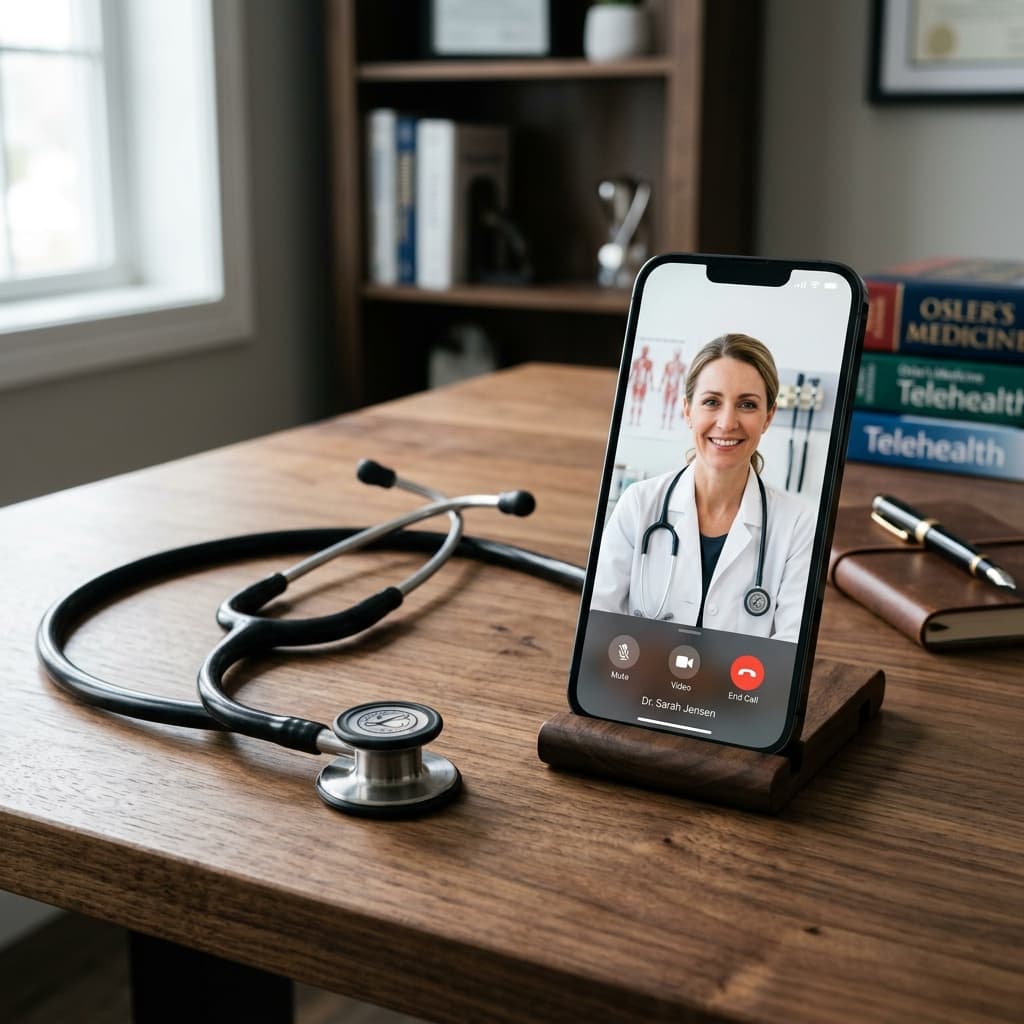
Australians today have more healthcare options than ever. With telehealth consultations now widely available, patients no longer need to choose between convenience and quality care. But when should you opt for a virtual appointment, and when is an in-person visit essential?
This comprehensive guide breaks down the key differences between telehealth and in-person GP visits in Australia, helping you make smarter healthcare decisions that save time, money, and stress.
What Is Telehealth? A Quick Overview
Telehealth refers to medical consultations conducted remotely via phone or video call. In Australia, telehealth services expanded significantly during and after COVID-19, with Medicare rebates making virtual GP visits accessible and affordable for most patients.
Through platforms like Medidoc, you can consult with experienced, registered doctors from your phone, tablet, or computer - no waiting rooms, no travel, no time off work.
When Telehealth Is the Best Option
Telehealth is ideal for non-emergency, routine, and follow-up medical needs where a physical examination is not strictly required. Common scenarios include:
1. Prescription Refills and New Scripts
Need a repeat prescription for the pill, blood pressure medication, or antidepressants? A telehealth doctor can review your history and issue an eScript sent directly to your phone - no pharmacy visit required until you’re ready to collect.
2. Medical Certificates
Feeling unwell and need a medical certificate for work or uni? A telehealth consultation is the fastest way to get a legally valid certificate issued by a registered doctor. Most consultations take under 15 minutes.
3. Cold, Flu, and Minor Infections
Sore throat, cough, runny nose, mild fever? These are textbook telehealth cases. The doctor can assess symptoms, recommend treatment, and prescribe antibiotics or antivirals if needed.
4. Mental Health Check-Ins
Telehealth provides a private, comfortable setting for discussing anxiety, depression, stress, or sleep issues. Many patients find it easier to open up from the comfort of home.
5. Sexual Health Consultations
STI testing referrals, contraception advice, and UTI treatment are among the most common telehealth consultations. The privacy of a virtual appointment removes the embarrassment some patients feel in a waiting room.
6. Specialist Referrals and Pathology Requests
If you need a referral to a specialist or a pathology/imaging request, a telehealth GP can issue these digitally after assessing your situation.
7. Travel and Rural Access
Living in regional or remote Australia? Travelling overseas? Telehealth removes geographic barriers, giving you access to quality medical care from anywhere with an internet connection.
When You Should See a GP In Person
In-person visits remain essential when a physical examination is needed to properly diagnose or treat your condition. Key situations include:
1. Physical Examinations
Lumps, rashes requiring close inspection, joint mobility issues, abdominal pain, and ear infections often require hands-on assessment. A doctor needs to palpate, listen (with a stethoscope), or visually inspect the area in person.
2. Chronic Disease Management
While telehealth can handle routine check-ins, ongoing management of diabetes, heart disease, or COPD may require blood pressure readings, blood tests, and physical assessments that need in-person attendance.
3. Procedures and Vaccinations
Skin biopsies, wound care, immunisations, Pap smears, and other hands-on procedures must be done face-to-face.
4. Complex or Undiagnosed Symptoms
If your symptoms are unclear, worsening, or involve multiple body systems, an in-person GP can conduct a thorough physical examination and order immediate investigations.
5. Emergency and Urgent Situations
Telehealth is NOT for emergencies. If you’re experiencing chest pain, difficulty breathing, severe bleeding, or signs of stroke, call 000 immediately or go to your nearest emergency department.
Telehealth vs In-Person: Side-by-Side Comparison
Here’s a practical comparison to help you decide:
- Convenience - Telehealth: High, consult from anywhere | In-Person: Requires travel and waiting
- Wait Time - Telehealth: Minutes | In-Person: Hours to days
- Cost - Telehealth: Often lower or bulk-billed | In-Person: Standard GP fees apply
- Physical Exam - Telehealth: Limited (visual only) | In-Person: Full hands-on examination
- Prescriptions - Telehealth: eScripts issued digitally | In-Person: Paper or eScript at clinic
- Medical Certificates - Telehealth: Issued instantly online | In-Person: Issued at appointment
- Best For - Telehealth: Routine, follow-ups, scripts | In-Person: Complex, physical, procedures
- Privacy - Telehealth: High, no waiting room | In-Person: Standard clinic setting
- Availability - Telehealth: 7 days, extended hours | In-Person: Business hours (usually)
Is Telehealth Safe and Legitimate in Australia?
Absolutely. Telehealth in Australia is:
- Regulated by AHPRA and the Medical Board of Australia
- Covered by Medicare (bulk-billed consultations available)
- Conducted by fully registered, experienced doctors
- Compliant with Australian privacy and medical record laws
Medidoc doctors are registered medical practitioners who follow the same clinical guidelines as in-person GPs. All consultations are confidential and securely recorded.
How to Decide: A Simple Checklist
Choose telehealth if:
- You need a prescription refill, medical certificate, or referral
- Your symptoms are mild and you can describe them clearly
- You want a quick consultation without leaving home
- You’re in a remote area or travelling
- You prefer a private, convenient consultation
Choose in-person if:
- You need a physical examination (e.g. lump, rash, joint)
- Your symptoms are severe, worsening, or unclear
- You need a procedure, vaccination, or hands-on treatment
- It’s a medical emergency (call 000)
Can You Use Both? The Hybrid Approach
Many Australians are adopting a hybrid healthcare model - using telehealth for convenience-driven appointments and seeing their regular GP for comprehensive check-ups and physical assessments.
For example:
- Start with a telehealth consultation for initial assessment
- Get referred for pathology or imaging if needed
- Follow up via telehealth to review results
- Visit a GP in person only if a physical exam or procedure is required
This approach saves time and ensures you get the right level of care for each situation.
Why Choose Medidoc for Telehealth?
Medidoc makes telehealth simple, fast, and affordable:
- Consult with experienced, registered doctors in minutes
- Available 7 days a week with extended hours
- eScripts, medical certificates, and referrals issued digitally
- No Medicare card required - open to all patients in Australia
- Secure, private, and AHPRA-compliant
Book your telehealth consultation now →
Condition-Specific Examples
For ear pain, telehealth can help with triage, but some cases still need an otoscope exam. Our ear infection guide explains that balance in more detail.
For painful periods affecting daily life, our period pain telehealth guide shows when an online consultation is a sensible first step and when further investigation matters.
For a typical recurrent cold sore, speed matters, which is why our cold sore treatment guide focuses on early telehealth review.
Common Australian Scenarios: Telehealth or In Person?
The safest choice often becomes clearer when you compare real-world scenarios rather than abstract rules. Use the guide below to decide whether telehealth is a strong first step, whether an in-person GP visit is more useful, or whether the problem should be escalated immediately.
Usually reasonable to start with telehealth
- You need a repeat prescription for stable ongoing medication and the doctor mainly needs an updated history rather than a physical examination.
- You need a medical certificate for a short-term illness and your symptoms can be assessed well by history.
- You have a mild new rash and can provide clear photos, especially if the question is whether it looks suitable for telehealth triage before you book.
Usually better as an in-person GP visit
- A child has ear pain, because many cases still need an ear examination with an otoscope. Start with the ear infection treatment guide if you want to understand the limits first.
- You have an uncertain or changing skin problem that may need palpation, swabs, or a closer physical look rather than photo-only review.
- You have ongoing pelvic pain or recurrent period-related pain where a physical examination, imaging, or referral planning may be needed. The period pain telehealth guide explains when telehealth is only the starting point.
Do not wait for a routine GP appointment
- Chest pain, severe shortness of breath, stroke symptoms, collapse, or other red flags should go through the ED vs GP guide and urgent emergency pathways instead of standard booking decisions.
Frequently Asked Questions
Is telehealth as good as seeing a doctor in person?
For many conditions, yes. Telehealth is clinically effective for consultations that don’t require physical examination. Studies show patient satisfaction with telehealth is consistently high in Australia.
Can a telehealth doctor prescribe medication?
Yes. Registered telehealth doctors can prescribe most medications, including antibiotics, contraceptives, mental health medications, and chronic disease scripts. Learn more about online prescriptions.
Is telehealth bulk-billed in Australia?
Some telehealth providers offer bulk-billed consultations for eligible patients. Medidoc offers affordable consultations with transparent pricing - no hidden fees.
Can I get a medical certificate via telehealth?
Yes. Telehealth medical certificates are legally valid for work, university, and Centrelink purposes. Get yours here.
What if the telehealth doctor can’t help me?
If your condition requires in-person assessment, the telehealth doctor will advise you accordingly and can refer you to an appropriate local provider or specialist.
Ready to See a Doctor Online?
Skip the waiting room. Book a telehealth consultation with Medidoc and get the care you need - fast, affordable, and from wherever you are in Australia.