
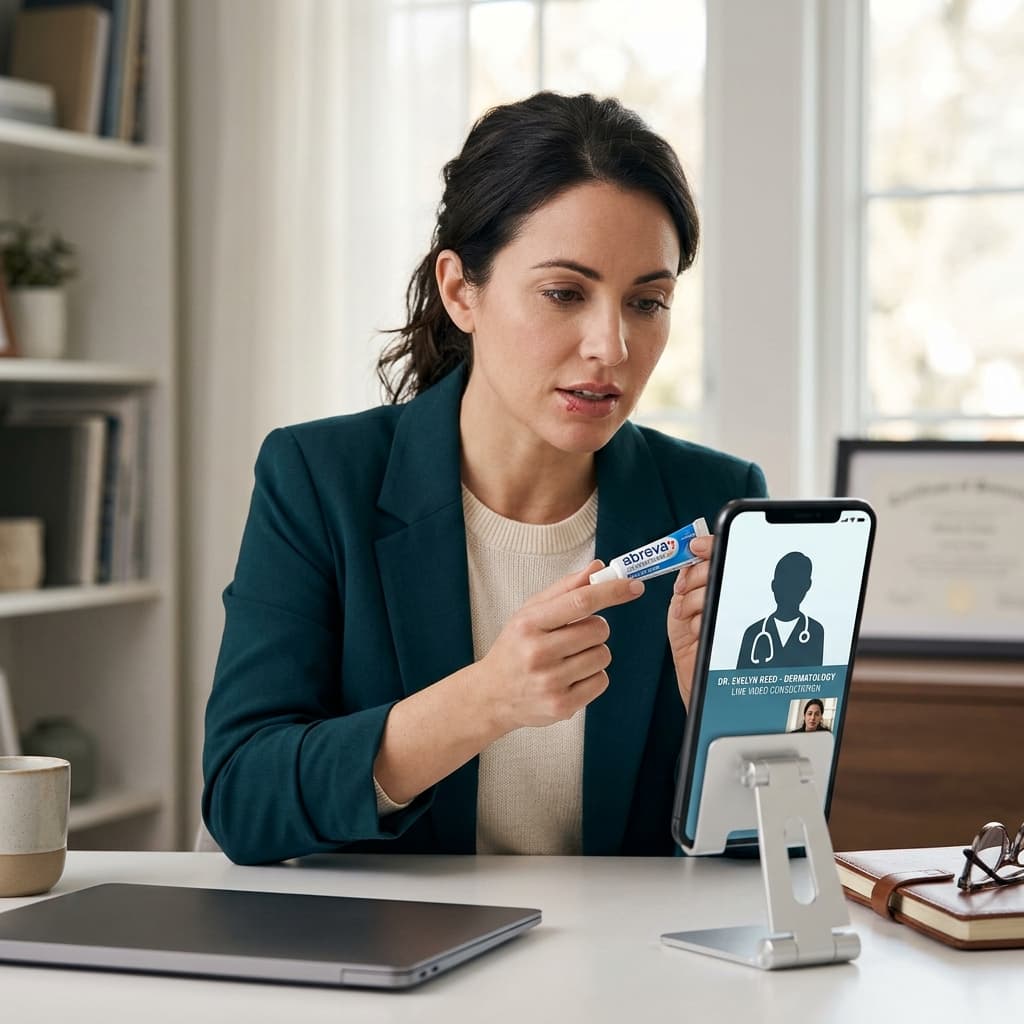
Cold sores often start with a familiar tingle, burning feeling, or small cluster of blisters on or around the lips. Because treatment works best when started early, telehealth can be a useful option if you want same-day advice without waiting for a face-to-face appointment.
This article is specifically about oral cold sores around the mouth. It is not a general herpes guide, and it is not intended for genital symptoms or severe facial infections.
What Is a Cold Sore?
Cold sores are usually caused by herpes simplex virus type 1. They often recur in the same general area and can be triggered by illness, stress, sunlight, or immune-system strain.
Early Signs and Stages
- Tingling, itching, or burning before a blister appears
- Small painful blisters on or around the lips
- Crusting or scabbing as the sore heals
- Tenderness that may flare with eating, speaking, or tooth brushing
Why Early Treatment Matters
Cold sore treatment is most time-sensitive right at the start. If you can speak to a doctor when symptoms are still in the tingle or early blister phase, you may get better advice about whether treatment is likely to help.
When Telehealth Can Help
- You have typical recurrent cold sore symptoms and want treatment quickly
- You want to know if an antiviral prescription may be appropriate
- You want advice on over-the-counter relief and self-care
- You want to avoid a clinic visit for a straightforward recurring problem
What a Doctor May Discuss
Antiviral Treatment
For some patients, especially early in an outbreak, a doctor may discuss whether prescription treatment is appropriate. If so, they can send an eScript to your phone for pickup at a pharmacy.
Self-Care and Trigger Management
Telehealth is also useful for reviewing how often cold sores recur, what may be triggering them, and what practical steps may reduce spread or discomfort.
Broader Review If Symptoms Are Unusual
If the area is not behaving like a typical cold sore, if lesions are widespread, or if this is your first severe outbreak, the doctor may advise in-person review.
How To Reduce Spread
- Avoid kissing and oral contact while a sore is active
- Do not share lip balm, utensils, or towels
- Wash your hands after touching the area
- Avoid picking at blisters or scabs
- Use sun protection on the lips if sunlight is a trigger
When You Need In-Person Care
- The outbreak is severe, widespread, or unusually painful
- You have symptoms involving the eye
- You are immunocompromised
- The diagnosis is uncertain
- The sore is not healing as expected
Cold Sore vs Skin Rash or Mouth Ulcer
This article is for typical oral cold sores around the lips, especially when tingling or blistering has just started. It is intentionally separate from broader skin rash advice.
If the area is a widespread rash, uncertain skin lesion, or not behaving like a usual lip cold sore, read the skin rash online doctor guide or book a consultation for individual advice.
Frequently Asked Questions
Can an online doctor prescribe treatment for cold sores?
Yes. A telehealth doctor can assess whether your presentation sounds like a typical oral cold sore and discuss treatment options, including prescription treatment when clinically appropriate.
Is telehealth better if I catch it early?
Yes. Cold sore treatment decisions are often most useful in the early stage, when tingling or a small new blister has just appeared.
Are cold sores the same as mouth ulcers?
No. Cold sores usually appear on or around the lips and are caused by herpes simplex virus. Mouth ulcers form inside the mouth and behave differently.
When should I worry about a cold sore?
You should get prompt review if the sore is severe, keeps recurring unusually often, spreads near the eye, or does not heal in a normal timeframe.
Do I need a script every time I get one?
Not always. Some patients manage mild outbreaks with supportive care alone, while others benefit from prescription treatment depending on timing and severity.
Need Help at the First Sign of a Cold Sore?
If you want fast advice while the sore is still starting, book a Medidoc consultation and speak to a doctor about treatment, prescriptions, and recurrence prevention.